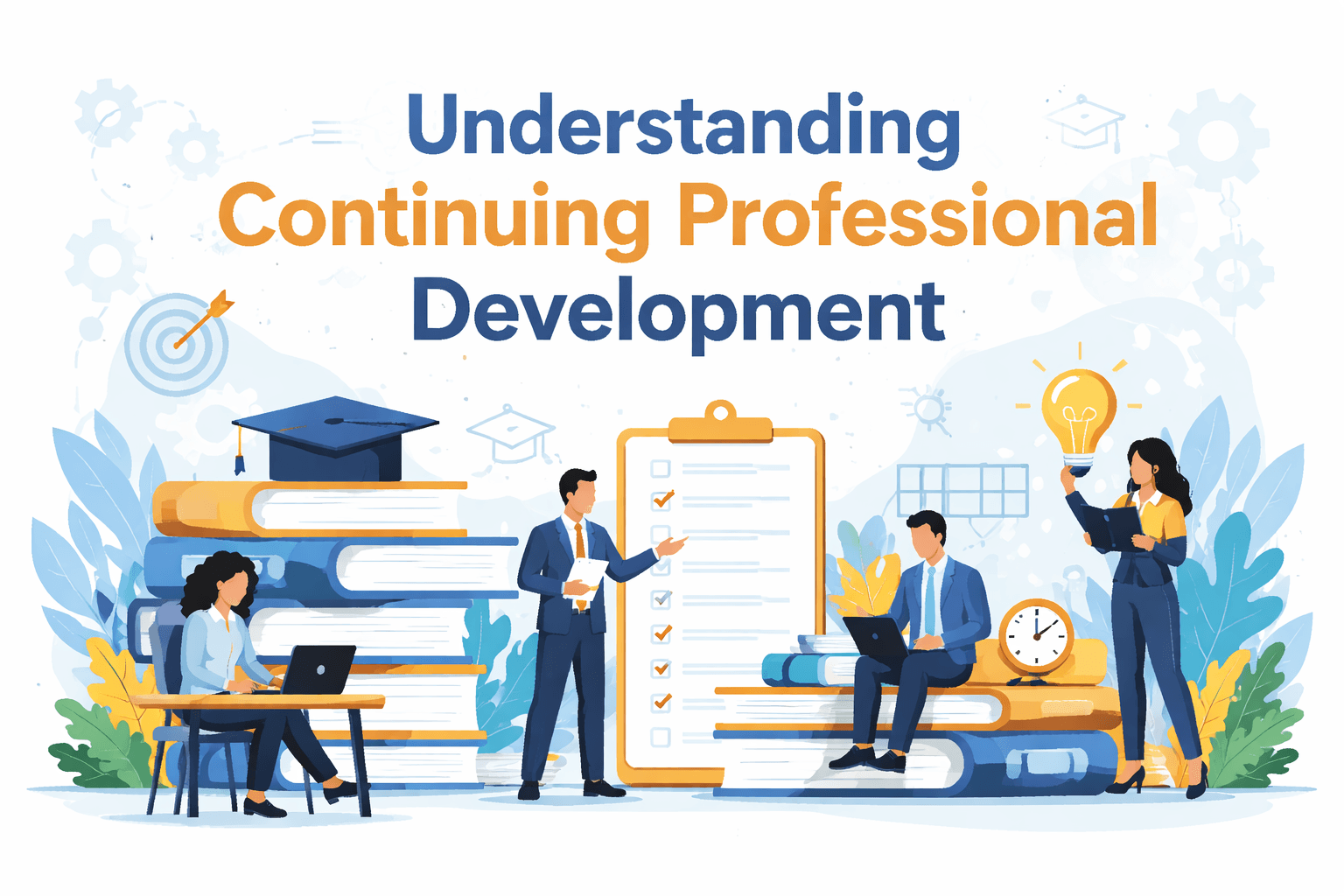
Continuing Professional Development (CPD) is the ongoing, intentional process by which professionals maintain and enhance their skills, knowledge, and competencies throughout their working lives. CPD ensures practitioners stay up-to-date with emerging methods, technologies, regulations, and industry standards relevant to their fields. Rather than a one-time event, CPD is a lifelong commitment to learning that supports career progression, professional credibility, and quality performance.
What is Continuing Professional Development?
Continuing Professional Development (CPD) is the ongoing, intentional process by which professionals maintain and enhance their skills, knowledge, and competencies throughout their working lives. CPD ensures practitioners stay up-to-date with emerging methods, technologies, regulations, and industry standards relevant to their fields. Rather than a one-time event, CPD is a lifelong commitment to learning that supports career progression, professional credibility, and quality performance.
Why Professionals Need Ongoing Learning?
Professions evolve continuously, often driven by innovation, evidence-based research, and changing societal needs. CPD enables professionals (whether nurses, engineers, teachers, or IT specialists) to apply current best practices safely and effectively. Without ongoing learning, outdated skills or knowledge can compromise service quality, compliance, and career opportunities.
Key reasons CPD matters include:
Enhancing Competence: Builds on foundational training and certifications acquired at career start, ensuring skills grow alongside the profession.
Adapting to Change: Sectors such as healthcare, engineering, and technology undergo rapid changes in tools, regulations, and methodologies; CPD helps professionals integrate these advances.
Preventing Professional Stagnation: Continuous learning fosters innovation, problem-solving, and confidence, reducing the risk of falling behind peers or industry standards.
Supporting Career Growth: Employers and professional bodies often recognize CPD engagement through promotions, certifications, and salary increases.

How CPD Works in Practice
CPD is typically a planned, active learning process tailored to the individual's role, professional requirements, and personal development goals. It encompasses various formats, including formal courses, workshops, seminars, self-directed reading, mentoring, and reflective practice.
Effective CPD practice involves:
Setting Clear Objectives: Identify skills or knowledge areas that need improvement, aligning them with job responsibilities or career aspirations.
Selecting Appropriate Activities: Choose from accredited training sessions, industry conferences, online modules, or practical experiences that align with your identified goals.
Recording and Reflecting: Document the type, duration, and outcomes of activities in a CPD portfolio or log, often required by regulatory bodies. Reflection on how learning applies to work enhances retention and practical value.
Reviewing Progress Regularly: Periodic evaluation of CPD achievements helps adjust plans and ensures ongoing relevance.
The Benefits of Staying Engaged
Engaging in CPD brings clear advantages by enhancing job effectiveness and personal fulfillment, because it ensures professionals remain capable and motivated in their roles.
Improved Professional Performance: Keeps skills sharp and knowledge current, enabling confident decision-making and service delivery.
Compliance with Professional Standards: Many industries mandate minimum CPD hours for license renewal or certification, ensuring public trust and safety.
Increased Job Satisfaction and Motivation: Exposure to new ideas and techniques reduces monotony and burnout.
Expanded Career Opportunities: Demonstrated commitment to learning is attractive to employers and can open doors to leadership roles or specialization.
Getting Started with CPD
Starting CPD means using available resources and guidelines to begin learning consistently, because early commitment builds a habit that supports long-term skill development and career success.
Consult Professional Guidelines: Regulatory bodies, such as medical boards, engineering councils, or teaching authorities, often define CPD requirements, including specific activities and documentation.
Leverage Available Resources: Utilize professional associations, online platforms, workplace training, and community events.
Create a Realistic Schedule: Dedicate regular time slots (weekly or monthly) for CPD activities to build consistency.
Embrace Technology: Use digital tools and apps designed for tracking CPD credits and reminders.
Adopt a Growth Mindset: View CPD as an opportunity for continual improvement rather than an obligation.
In essence, Continuing Professional Development is a fundamental aspect of professional life, anchoring successful, ethical, and fulfilling careers. By committing to lifelong learning, professionals not only uphold standards and safety but also unlock personal and career potential in an ever-changing world. Start your CPD journey today to ensure your skills and knowledge remain as dynamic as the industries you serve.