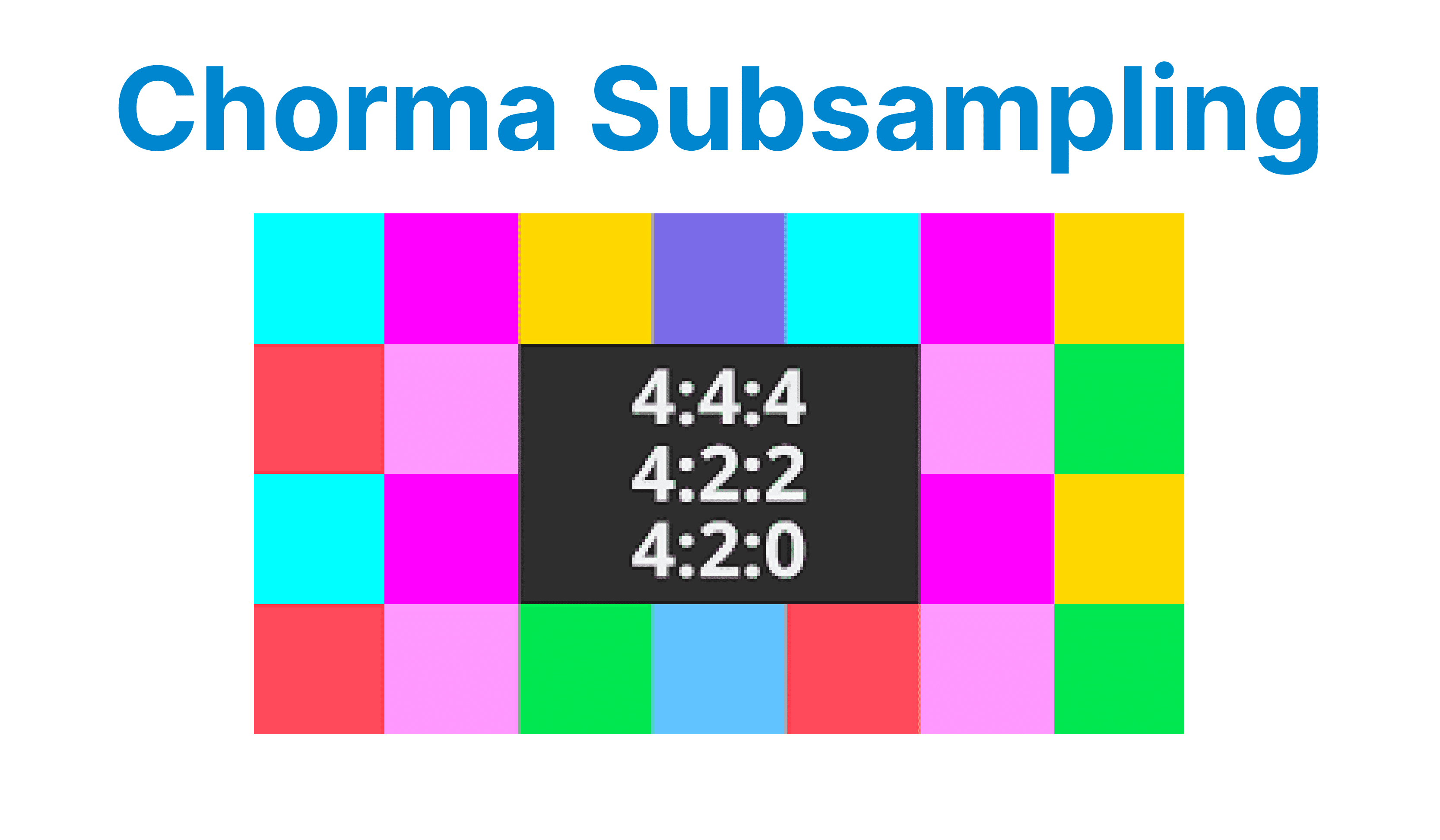
Chroma subsampling is a video compression technique that reduces color (chroma) data relative to brightness (luma) information. This approach is based on the fact that the human eye is more sensitive to changes in brightness than to color differences.
In digital video formats like YUV, the signal is split into luminance (Y) and chrominance (Cb and Cr) components. Luminance defines shapes and contrast, which form the majority of perceived image detail. Reducing chroma resolution allows encoders to preserve clarity while saving bandwidth, often cutting file size by up to 50% without noticeable loss in picture quality.
How Chroma Subsampling Works
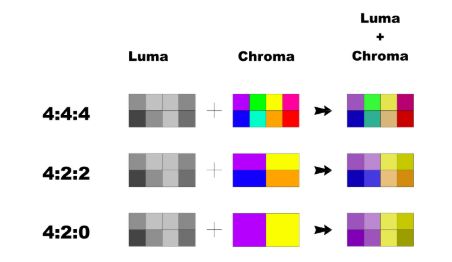
Chroma subsampling works by reducing the spatial resolution of the chroma channels while maintaining full resolution for the luma channel. In a standard 4×2 block of pixels:
- The first number (always 4) represents the horizontal resolution of the luma (Y) component.
- The second number represents the number of chroma (Cb and Cr) samples horizontally.
- The third number represents the number of chroma samples vertically.
For example, in 4:2:0 subsampling, chroma resolution is reduced both horizontally and vertically, while the luma signal remains at full resolution. This significantly reduces file sizes and is crucial for streaming, broadcasting, and video playback environments, where bandwidth and storage are limited.

4:4:4 – No Chroma Subsampling
In 4:4:4, each pixel has a unique chroma value — no color information is discarded. The chroma and luma signals are sampled at the same resolution, resulting in full-color fidelity.
This format is reserved for high-end use cases such as keying, visual effects, advanced color grading, and digital cinema mastering, where every pixel's color data must be preserved. However, the trade-off is increased file size and processing load.
Developer Consideration
4:4:4 is primarily used for post-production and professional environments. If the target device does not support full 4:4:4 decoding, consider using a lower subsampling format.
4:2:2 – Horizontal Subsampling
4:2:2 reduces horizontal chroma resolution by half while maintaining full vertical resolution. Every two horizontal luma samples share a single set of chroma samples, but each scanline retains its color values.
It is commonly used in professional video recording and broadcast environments. Formats like ProRes 422 and DNxHD use 4:2:2 subsampling to balance compression with color accuracy, especially for intermediate editing.
Developer Consideration
4:2:2 is often used in live video production or professional workflows requiring high-quality chroma data. However, consider that playback support for 4:2:2 is limited to higher-end systems, and not all media players support this format efficiently.
4:2:0—Horizontal and Vertical Subsampling
4:2:0 reduces both horizontal and vertical chroma resolution, storing one chroma sample for every 2×2 luma block. This provides the highest level of chroma compression among common subsampling formats.
Used extensively in streaming, digital distribution, Blu-ray, and mobile video, 4:2:0 offers optimal compression efficiency. While color precision is reduced, most users won't perceive the loss under normal viewing conditions.
Developer Consideration
4:2:0 is the most compatible format across devices, browsers, and media players. However, for tasks like color grading or heavy editing, this format may introduce visible color artifacts or reduce the precision of color adjustments.
Why Chroma Subsampling Matters
Chroma subsampling directly affects how efficiently video can be encoded, streamed, and decoded:
Compression Efficiency
Reducing chroma data cuts overall bitrate significantly while maintaining luma quality. This allows video to meet bandwidth constraints over HDMI, internet connections, and storage systems.
Color Accuracy
High chroma subsampling (like 4:4:4) avoids color bleeding and retains precision around edges and overlays. Lower formats (4:2:0) may soften edges or introduce color loss in high-saturation areas.
Hardware and Codec Compatibility
Most consumer hardware and web browsers are optimized for 4:2:0 playback. Support for 4:2:2 and 4:4:4 is typically limited to professional systems and may not be hardware-accelerated in all environments.
Editing and Grading Flexibility
Post-production workflows benefit from higher chroma fidelity. Subsampled formats may break down during aggressive color corrections or chroma keying, where fine color details are essential.