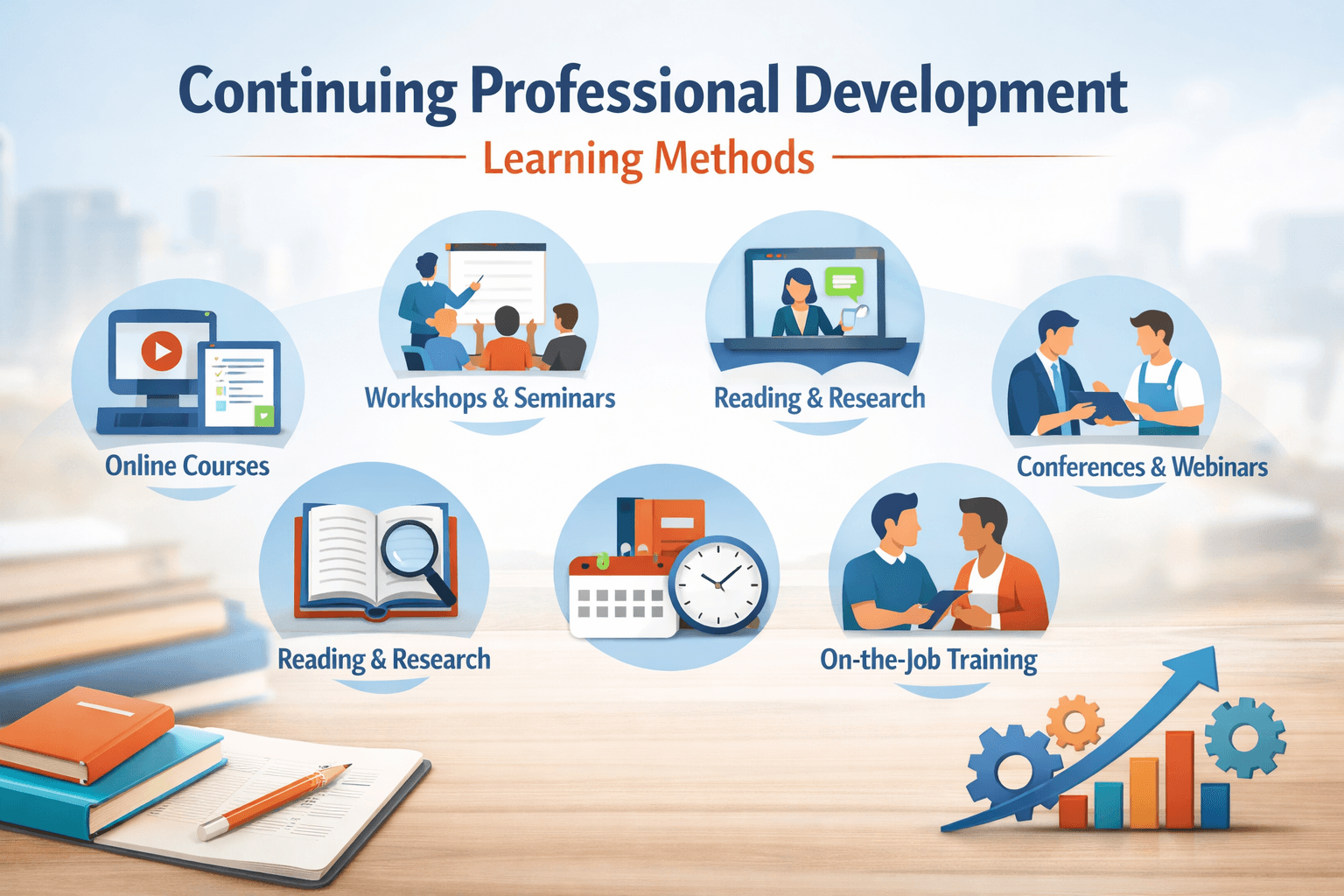
Continuing professional development relies on structured learning methods that help workers keep pace with new tools, standards, and expectations. As roles evolve, these methods ensure knowledge stays current and practical for real-world use. Each approach supports growth in a different way for professionals to strengthen skills that directly affect their daily responsibilities. Understanding these methods matters because the right form of learning can close gaps early, reduce errors, and improve confidence in changing work environments.
Prerequisites
Before diving into CPD learning methods, ensure you have the basics in place to make the process smooth and effective, because starting without them can lead to wasted effort or incomplete learning.
- Set Clear Goals: Decide what you want to learn, like improving a specific skill, so you can choose methods that match your needs.
- Check Resources: Make sure you have access to tools, such as a computer for online courses or books for reading, to avoid interruptions.
- Allocate Time: Plan your schedule to include regular slots for learning, even if it's just 30 minutes a day, to build consistency.
- Understand Requirements: Review any rules from your profession, like needed hours, to ensure your efforts count toward certifications.
Common Methods and How They Work
CPD methods range from group sessions to solo study, each designed to update skills in practical ways, because they connect learning to real tasks without wasting time.
Online Courses
Use these to watch short videos on your phone during breaks, then apply quizzes to test what you know. For example, a nurse could take a quick course on new patient apps, watch a 10-minute video on updating records, and immediately use the app in the next shift to track vitals faster.
Workshops and Seminars
Join these to practice hands-on exercises with others, like trying out tools in a group. A teacher might attend a virtual workshop on classroom tech, experiment with a new app during the session, and then use it in their next lesson to engage students with interactive quizzes.
Reading Books and Articles
Pick up a book or article and read sections that relate to your job, then note ideas to try. An engineer could read about eco-friendly materials, jot down tips on using recycled steel, and test a small design change in their next project to see if it cuts costs.
Conferences and Webinars
Attend these to listen to experts and ask questions about real issues, then bring ideas back to work. A doctor might join a webinar on heart treatments, ask about a new drug, and discuss it with colleagues to update their clinic's protocols for better patient care.
On-the-Job Training
Learn by doing tasks alongside someone experienced, like following a colleague's steps. A chef could shadow a senior cook to learn a new grilling technique, practice it during service, and get instant feedback to improve flavour and speed in the kitchen.
Mentoring and Peer Learning
Meet regularly with a mentor or peers to share challenges and solutions, then try them out. A software developer might discuss a coding bug with a mentor, get advice on a fix, and apply it to their code that day to resolve the issue and prevent future errors.
Choosing the Right Method for You
Picking a CPD method depends on your goals and resources, because the best one aligns with what you need to learn and how you prefer to do it.
Assess Your Needs
Step 1: List the skills you use daily in your job and note any areas where you feel unsure or outdated.
Step 2: Check what your profession demands, like new rules or tools, and match them to gaps in your knowledge.
Step 3: Think about your learning style—do you prefer hands-on practice or quiet reading?
Step 4: Prioritise one or two key areas to focus on first, so you don't spread yourself too thin.
Consider Time and Cost
Step 1: Review your weekly schedule and mark out free slots, like evenings or lunch breaks, to see how much time you can dedicate without stress.
Step 2: List your budget for learning, including any free options versus paid ones, and compare the costs of methods like online courses against workshops.
Step 3: Weigh the time each method takes—short videos might fit busy days, while long seminars need bigger blocks.
Step 4: Choose based on what fits best, aiming for low-cost, quick options if resources are limited.
Try and Adjust
Step 1: Pick one method that seems easy to start with, such as a free online video, and give it a trial run for a week to see how it feels.
Step 2: Track what works and what doesn't, like if the pace is too fast or too slow for you.
Step 3: If it doesn't click, switch to another method, maybe a group workshop for more interaction.
Step 4: Reflect after a few tries and tweak your approach, such as shortening sessions or mixing in breaks, to make it more enjoyable.
Combine for Best Results
Step 1: Select two methods that complement each other, like reading an article first to build basics, then attending a webinar for deeper discussion.
Step 2: Plan a sequence, such as doing the reading in the morning and the webinar in the evening, to space out the learning.
Step 3: Apply what you learn right away, perhaps by practising a skill from both in your job.
Step 4: Review how the combination helped, noting improvements, and adjust for future mixes to keep things effective.
In the end, different methods of continuing professional development learning give you flexibility to grow in your field. Whether you're picking online courses for convenience or workshops for practice, each one helps you stay sharp and confident. Try one today, and see how it changes your work.