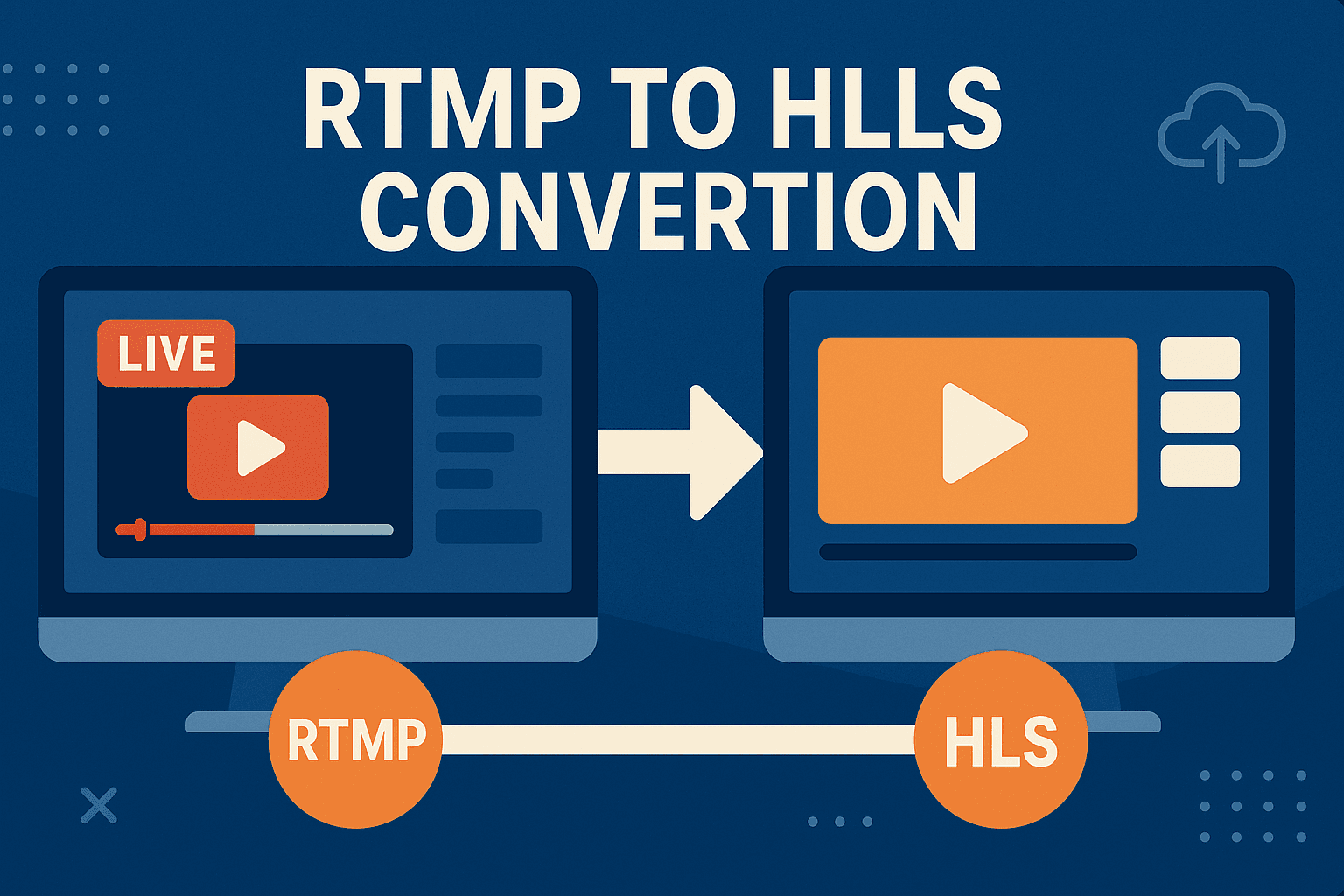
Imagine you're setting up a live video stream for an event, like a concert or a sports game. You need a way to send that video from your camera or device to a server so viewers can watch it in real time. That's where RTMP comes in. RTMP (Real-Time Messaging Protocol) pushes live video data from a source directly to a streaming server. It works well for sending the stream over the internet, but it has limits when it comes to how people watch it on different devices.
Now, think about viewers tuning in on phones, tablets, or computers. They might have slow or fast internet connections, and the video needs to adjust smoothly. HLS (HTTP Live Streaming) is a format that breaks the video into small chunks and delivers them over standard web connections. This helps devices to play the stream without needing special software. HLS is like cutting a long video into short pieces that load one after another for the player to switch quality based on the viewer's connection speed.
Prerequisites
Before you start converting an RTMP stream to HLS, make sure you have these basics in place:
- A live streaming source or encoder capable of outputting RTMP streams (e.g., OBS, Wirecast, vMix).
- DRM-capable media packaging tools or streaming servers that support RTMP ingestion and HLS origination (e.g., FFmpeg, NGINX with RTMP module, Wowza, AWS Elemental, Azure Media Services).
- Server or cloud environment to host HLS segments and manifests, preferably configured with HTTPS for security.
- Basic knowledge of streaming protocols, HTTP adaptive streaming, and command-line or server configuration.
- An optional multi-bitrate encoding setup or transcoding environment for adaptive streaming.
- Optional integration with CDN providers for scalable distribution.
Converting RTMP to HLS for Modern Playback
Converting RTMP to HLS helps deliver live streams to modern devices that no longer support RTMP playback. HLS enables broad compatibility by segmenting video into HTTP-deliverable chunks and supports adaptive bitrate streaming for smooth playback across various network conditions. This conversion also improves scalability and security for streams to leverage Content Delivery Networks and HTTPS delivery.
RTMP Stream Ingest Setup
RTMP streams capture live video from encoders due to their low latency and reliability. Setting up RTMP ingest ensures a stable entry point to receive live content before conversion.
Step 1: Configure your encoder to output an RTMP stream pointing to your media server’s RTMP ingest URL (e.g., rtmp://your-server/live/stream).
Step 2: Use an RTMP-capable server or service to receive this stream. Popular choices include:
- NGINX with nginx-rtmp-module for self-hosted setups.
- Wowza Streaming Engine or AWS Elemental MediaLive for managed/enterprise solutions.
Step 3: Ensure the RTMP server is accessible and configured securely with a network firewall and TLS where possible.
Transcoding and Packaging to HLS
Transcoding prepares the incoming RTMP stream for HTTP-based delivery by segmenting and packaging it into HLS format. This adapts the stream for efficient, scalable playback on modern devices.
Step 1: If codec compatibility is guaranteed (H.264 video, AAC audio), segment the stream into MPEG-TS chunks and generate .m3u8 playlists directly without re-encoding to minimize latency and CPU use.
Step 2: If adaptive streaming or codec conversion is needed (creating multiple resolutions or bitrates), transcode the incoming RTMP stream into multiple renditions.
Step 3: Use tools like:
- FFmpeg: Ingest RTMP and output segmented HLS playlists and chunks (.m3u8 and .ts files).
- NGINX-RTMP: Supports RTMP ingest and native HLS output.
- Wowza, AWS Elemental MediaLive, Azure Media Services: Managed platforms that ingest RTMP and transcode+package to HLS automatically.
Step 4: Configure segment duration (typical HLS chunk length is 2-6 seconds) and playlist size for latency and compatibility balance.
Step 5: Generate a master playlist listing all renditions for adaptive bitrate streaming.
Example FFmpeg Command Snippet for RTMP to HLS:
ffmpeg -i rtmp://your-server/live/stream -c:v libx264 -c:a aac -f hls \
-hls_time 4 -hls_list_size 6 -hls_flags delete_segments \
-master_pl_name master.m3u8 output_%v.m3u8
Secure and Optimize HLS Delivery
HLS streams must be served securely over HTTPS and optimized for low latency and adaptive bitrate performance. Proper delivery setups ensure reliable access and quality under varying network conditions.
Step 1: Serve your HLS .m3u8 playlists and .ts segment files over HTTPS to prevent tampering and protect user privacy.
Step 2: Integrate authentication or token-based URL signing for access control.
Step 3: Use a Content Delivery Network (CDN) to cache and distribute HLS content globally with low latency.
Step 4: Monitor stream health and segment availability with automated tools or analytics.
Client Playback Integration
Integrating HLS playback requires compatible players that fetch and play segmented streams, enabling seamless adaptive streaming across devices and platforms.
Step 1: For web playback on non-Safari browsers, use JavaScript players (like Video.js or hls.js) to fetch and play HLS streams.
Step 2: On mobile or native apps, AVPlayer (iOS/macOS) and other platforms provide built-in HLS support.
Step 3: Confirm playback seamlessly switches between renditions for adaptive streaming.
Step 4: Verify DRM integration if required by wrapping HLS with FairPlay Streaming or other DRM technologies.
Test and Play the Stream
Testing live HLS streams across devices and network conditions confirms encryption, playback stability, and adaptive switching, ensuring readiness for public broadcast.
Step 1: Test playback on representative devices and browsers at varying network conditions.
Step 2: Confirm adaptive bitrate switching occurs smoothly without buffering spikes.
Step 3: Simulate stream interruptions and verify that the player gracefully handles network losses.
Step 4: Review server logs and CDN reports to detect segment delivery or caching issues.
Step 5: Optimize chunk sizes and playlist settings for desired latency and startup time.