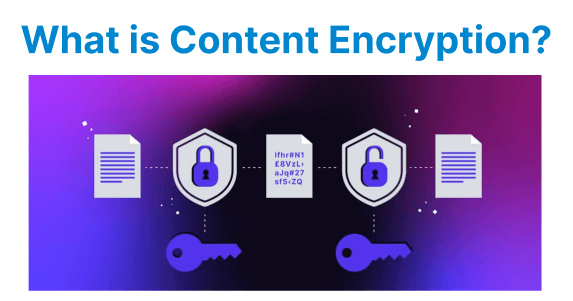
Content encryption is the process of transforming digital assets, such as video, audio, and documents, into an unreadable format to protect them from unauthorized access. In video streaming, encryption serves as the cornerstone of content protection so that only authorized users can access and consume the content.
This prevents piracy and unauthorized redistribution of media. Platforms like Netflix, Hulu, and Amazon Prime Video implement content encryption to secure their video assets, safeguarding intellectual property from upload to playback.
Key Encryption Standards in Video Streaming
AES-128/AES-256 Encryption
The Advanced Encryption Standard (AES) is the industry standard for encrypting content. Both AES-128 and AES-256 are used in video encryption workflows, with the main distinction being the length of the encryption key:
AES-128 strikes a balance between security and computational efficiency. It is adopted by many streaming services like Netflix and Amazon Prime for smooth playback without performance drawbacks.
AES-256 offers a high security level but requires more computational power for high-value media or sensitive content where extra protection is needed, even at the cost of performance.
For Example:
Netflix uses AES-128 to secure its content, enabling strong encryption for a better viewing experience across devices.
Premium Content: For sensitive content like 4K videos, AES-256 encryption might be employed to provide additional protection.
RSA Encryption: Content Encryption
Content encryption uses encryption techniques to protect video data during transmission and ensure only authorized users can access it. While AES is responsible for encrypting the content itself, RSA encryption is employed to secure the key used for decryption.
Example:
Netflix applies RSA encryption to wrap AES keys before delivering encrypted content to users. When a user requests a video, the content is transmitted securely with the AES key encrypted using RSA. The device then decrypts the RSA-wrapped key and accesses the content if the user has the necessary decryption rights.
How Content Encryption Works in Video Streaming Platforms
Video Encryption during Upload
When video content is uploaded to platforms, it's encrypted using AES before being stored. This encryption protects the content as it moves through networks and servers.
Example:
When a movie or TV show is uploaded, it is first encrypted using AES-128 (or higher for exclusive content). Netflix uses CDNs to deliver the content for secure storage and distribution across multiple servers before playback.
Key Generation & Encryption
AES Encryption is applied to each video file, and the content is split into segments to reduce the risk of piracy. The AES key used to encrypt the video content is managed by a Digital Rights Management (DRM) system and stored in a Hardware Security Module (HSM) so that it remains secure and inaccessible to unauthorized users.
Secure Content Delivery via CDNs
Once encrypted, the content is distributed through Content Delivery Networks (CDNs). CDNs cache video segments on servers closer to the user's location to reduce buffering and improve playback speed.
Hulu and Amazon Prime Video both rely on CDNs for secure video delivery. Encrypted segments are sent to edge servers, and the user can decrypt them in real time using the AES-128 key provided by the license server.
License Request and Key Distribution
After encrypted content is delivered, the client device retrieves the decryption key from a license server. The server validates the user's credentials and securely transmits the key, enabling access to the content.
Example:
When a user tries to play a title, the app requests the AES key from the license server. The key is securely transmitted via RSA encryption to intercept unauthorized users.
Decryption and Playback
As the encrypted video segments are streamed, the client device uses the AES-128 key to decrypt them. Then the video content is passed to the media player for playback.
Security Practices in Content Encryption
Certificate Pinning for MITM Protection
To protect against Man-in-the-Middle (MITM) attacks, streaming platforms use certificate pinning. Hence, only trusted servers are used for secure communications between the client and license server.
Certificate Pinning: Streaming platforms embed a public key or certificate within the application to gain the client’s trust over specific & reliable servers. If an attacker attempts a MITM attack by injecting a malicious certificate, the connection is rejected.
Example:
Netflix implements certificate pinning to secure the communication between the client and the license server. This prevents cyber attackers from intercepting the decryption key during transmission.
Hardware-Backed DRM (Widevine L1, FairPlay Secure Enclave)
DRM systems like Widevine L1 and FairPlay Secure Enclave use hardware-backed encryption to store and process decryption keys in a secure environment to protect against unauthorized access.
Widevine L1: This security level is used on Android devices to store and process the AES keys within the Trusted Execution Environment (TEE). This prevents unauthorized extraction of the decryption keys.
FairPlay Secure Enclave: Apple uses this feature to store content keys in an isolated hardware environment on iOS and macOS devices for protection against key extraction.
Best Practices for Video Content Encryption
Key Management
Proper key management secures video content. This includes regular key rotation and using Hardware Security Modules (HSMs) for secure storage and management.
Adaptive Bitrate Streaming with Encryption
Adaptive Bitrate Streaming provides video quality that adapts to various network conditions while maintaining encryption integrity.
Minimize Latency
For live streaming, you must minimize latency. AES-128 provides a quick decryption process and real-time playback without delays.